
Detailed Guide to Safe Beginner Dildos

Understanding Materials and Safety Standards for Dildos
When shopping for intimate wellness toys, material safety should always come first. The market features various materials ranging from premium, non-porous compounds to budget plastics. Understanding how these substances interact with your anatomy ensures a comfortable, hygienic, and long-lasting experience.
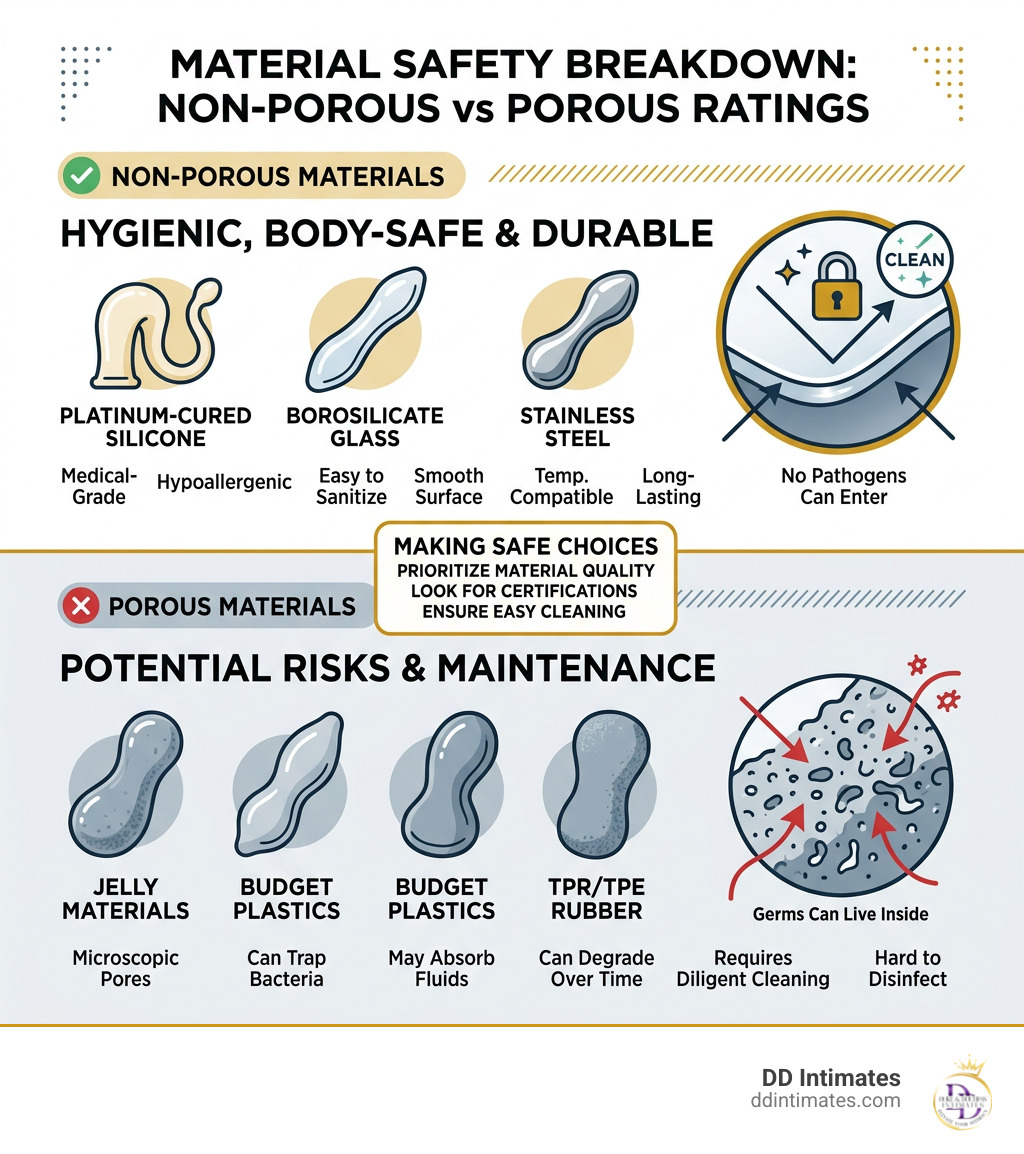
High-grade adult toys rely on inert, non-porous materials that will not degrade or leach chemicals when exposed to bodily fluids or lubricants. The three gold-standard materials are:
- Platinum-Cured Silicone: Medical-grade silicone is velvety, body-safe, flexible, and completely hypoallergenic. Unlike lower-grade rubbers, platinum-cured silicone contains no phthalates or heavy metal stabilizers.
- Borosilicate Glass: Laboratory-grade glass is completely non-porous, hypoallergenic, and firm. It allows for temperature play (warming or cooling in water) and provides rigid, targeted stimulation.
- Stainless Steel: Medical-grade steel provides firm, smooth weight and can be warmed or chilled. It is durable and effortless to sanitize.
| Material | Porosity | Body-Safe? | Lubricant Compatibility | Sanitization Method |
|---|---|---|---|---|
| Platinum Silicone | Non-porous | Yes | Water-based only | Soap & water, boiling, top-rack dishwasher |
| Borosilicate Glass | Non-porous | Yes | Water, silicone, or oil-based | Soap & water, boiling, top-rack dishwasher |
| Stainless Steel | Non-porous | Yes | Water, silicone, or oil-based | Soap & water, boiling, top-rack dishwasher |
| TPE / TPR | Semi-porous | Conditional (requires care) | Water-based only | Warm soapy water (cannot boil) |
| Jelly / PVC / Vinyl | Porous | No (contains plasticizers) | Water-based only | Hand wash only (use condoms as barrier) |
Non-Porous vs Porous Materials
Porous materials—like traditional jelly rubber, PVC, and lower-grade vinyl—often contain plasticizers such as phthalates to make them flexible. Over time, these chemicals can degrade, emit strong chemical odors, and leave behind micro-pores that harbor bacteria and yeast even after thorough washing.
If you choose a glass option like a temperature-responsive borosilicate glass piece or a non-porous medical-grade silicone model, bacteria cannot penetrate the surface. If you ever use a porous toy, always roll a non-lubricated condom over it to create a protective barrier between the material and your skin.
Cleaning, Sterilization, and Maintenance
Maintaining hygiene protects against infection and preserves your items for years of use. Follow these essential care steps:
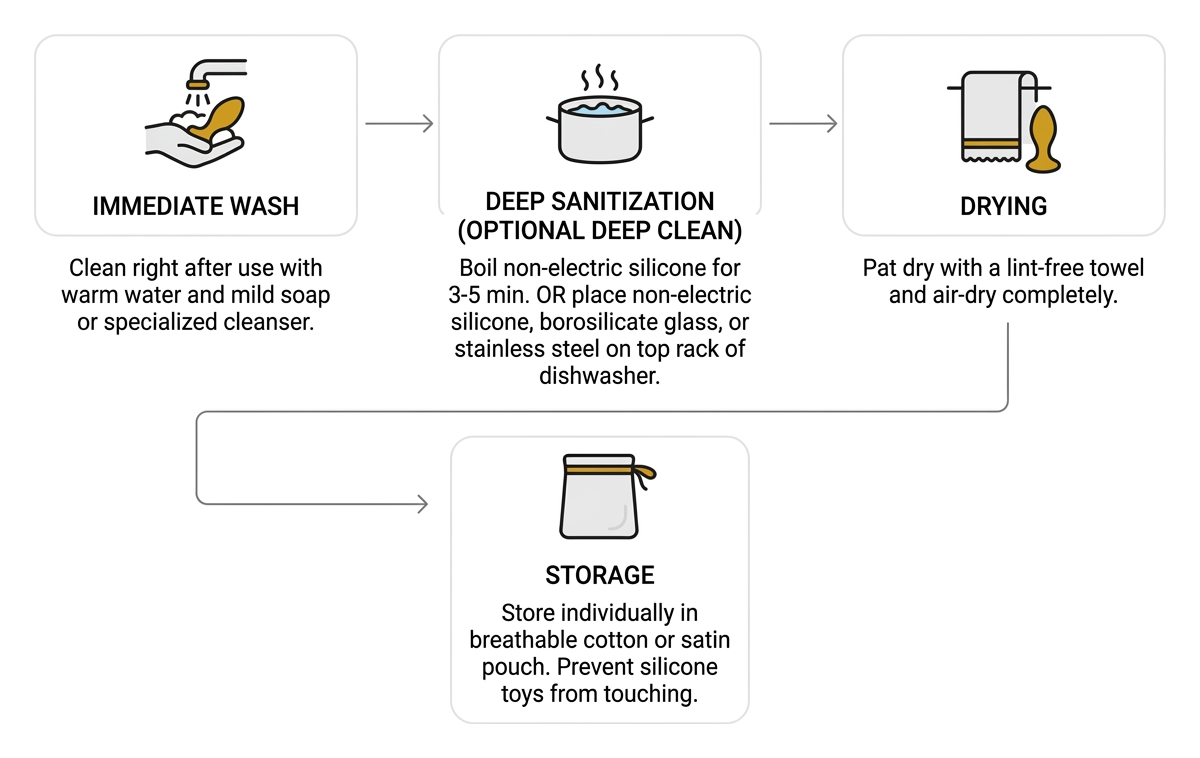
- Immediate Wash: Clean your toy right after use using warm water and a mild, fragrance-free antibacterial soap or specialized sex toy cleanser.
- Deep Sanitization: Non-electric, 100% silicone pieces can be submerged in boiling water for three to five minutes to achieve total sterilization. Pure borosilicate glass and stainless steel can also be boiled or placed on the top rack of a dishwasher.
- Drying and Storage: Pat the toy dry with a lint-free towel and let it air-dry completely. Store each toy individually in a breathable cotton or satin storage pouch. Never let two silicone toys touch during storage, as the materials can chemically react and melt together over time.
For a broader overview of how body-safe materials support intimate wellness, the World Health Organization provides guidance on sexual health and hygiene practices that can help you make informed choices about personal care products.
Core Types and Anatomical Designs
Modern intimacy products come in a diverse range of contours, densities, and textures to suit different anatomical preferences.
Realistic vs Fantasy Dildos
Realistic models mimic human anatomy with sculpted heads, raised veining, and realistic dual-layer silicone textures that provide a soft outer skin over a firmer inner core.
For those who prefer creative shapes over anatomical replicas, you can explore our curated fantasy dildos collection, which features jewel-toned finishes, ribbed ridges, and tapered profiles inspired by mythical themes.
Hands-Free, Suction, and Harness-Compatible Dildos
Positioning during solo or partnered sessions often benefits from specialized bases:
- Suction Bases: Designed to adhere firmly to smooth, flat, non-porous surfaces like bathroom tile, glass, or finished headboards. A suction-cup base model allows for versatile hands-free solo positioning.
- Harness Compatibility: Flat-flanged or flared bases fit securely through the O-rings of wearable strap-on harnesses. Choosing a comprehensive harness-ready pegging kit provides everything needed for partnered strap-on exploration.
Understanding the difference between manual and motorized designs can also help you choose the right shape. Non-vibrating dildos rely on manual movement, positioning, and anatomical contours to provide internal fullness and targeted pressure against sensitive areas like the G-spot or prostate. Vibrators contain internal motors that generate mechanical oscillating pulses focused on nerve endings. Both can be combined during solo or partnered sessions, and many beginners find that starting with a simple non-vibrating shape makes it easier to learn what kind of pressure and depth feels most comfortable before adding vibration.
Sizing Guide and Beginner Best Practices
Selecting the right dimensions ensures a relaxing, pleasurable experience without unnecessary pelvic tension or discomfort.
Finding the Right Length, Girth, and Shape
Market research shows standard products typically range from 4 to 6 inches in insertable length and 4 to 5 inches in circumference (girth). For beginners, modest dimensions are recommended:
- Length: Aim for 4 to 5 inches of usable length to avoid hitting the sensitive cervix or causing strain.
- Girth (Diameter): Focus on toys with a diameter under 1.5 inches (roughly 4 inches in circumference). Girth impacts internal fullness more directly than length.
- Shape: Opt for a gently tapered tip to make initial insertion smooth and gradual. A beginner-friendly smooth silicone dildo offers seamless entry without aggressive ridges.
Safe Lubrication and Insertion Techniques
Proper lubrication minimizes friction and makes insertion comfortable. Keep these key safety rules in mind:
- Match Lubricant to Material: Never use silicone-based lubricants with silicone toys, as they dissolve and degrade the surface. Use a generous amount of high-quality water-based lubricant instead.
- Warm Up Slowly: Engage in external arousal or manual stimulation before introducing an insertable toy to allow the pelvic floor muscles to relax naturally.
- Breathe Deeply: Inhale slowly and insert the toy gently on an exhale, never forcing movement against resistance.
- Anal Play Mandate: If exploring anal stimulation, only use toys equipped with an unmistakable, broad flared base to prevent the item from migrating into the rectal canal.
For additional context on how pelvic floor relaxation supports comfortable insertion, the Cleveland Clinic offers a helpful overview of pelvic floor function and relaxation techniques.
Frequently Asked Questions About Beginner Sex Toys
What is the difference between non-vibrating toys and vibrators?
Non-vibrating toys rely on manual movement, positioning, and anatomical contours to provide internal fullness and targeted pressure against sensitive areas like the G-spot or prostate. Vibrators contain internal motors that generate mechanical oscillating pulses focused on nerve endings. Both can be combined during solo or partnered sessions.
What should beginners do if insertion causes discomfort?
If you encounter resistance or pain, pause immediately. Apply additional water-based lubricant to both your body and the toy, take several slow, deep diaphragmatic breaths, and adjust your angle of insertion. If discomfort persists, size down to a slimmer model or focus on external relaxation first.
Are dual-density designs suitable for first-time users?
Yes. Dual-density construction pairs a firm silicone inner core with a supple, skin-like outer silicone layer. A dual-density silicone shaft provides comfortable structural firmness during movement while remaining soft on delicate internal tissues.
How do I know if a material is truly body-safe?
Look for non-porous materials such as platinum-cured silicone, borosilicate glass, or medical-grade stainless steel. These materials do not harbor bacteria in microscopic pores and do not contain phthalates or other plasticizers commonly found in jelly rubber or PVC. If a product does not clearly state its material, contact the retailer or choose a different item.
Can I use any lubricant with a silicone dildo?
No. Silicone-based lubricants can bond with and degrade the surface of silicone toys, causing them to become sticky or damaged over time. Use a high-quality water-based lubricant with silicone dildos. Water-based lubricants are also safe for glass and stainless steel, and they are easy to clean from the body and the toy after use.
How often should I clean a beginner dildo?
Clean your dildo before the first use and after every session. A quick wash with warm water and mild, fragrance-free antibacterial soap is usually enough for routine cleaning. For a deeper clean, non-electric silicone, glass, and stainless steel toys can be boiled for three to five minutes or placed on the top rack of a dishwasher. Always dry the toy completely before storing it in a breathable pouch.
Conclusion: Selecting the Perfect Option for Your Intimate Wellness
Finding the right intimate toy comes down to choosing body-safe materials, manageable beginner dimensions, and designs that match your personal comfort level. At DD Intimates, we carry body-safe, premium silicone, glass, and steel options designed to help you explore intimate wellness with confidence. Enjoy free shipping on orders over $100, secure checkout, and fast domestic delivery from the USA in plain, discreet packaging.
For more information on sexual health and safe intimate product use, the American Sexual Health Association provides educational resources that can support your wellness journey.
-
Posted in
dildos