
Best Water Based Lubricant for Sensitive Skin: The 2026 Guide

Why Choosing the Right Water Based Lubricant Matters for Sensitive Bodies
If you've ever reached for a water based lubricant and ended up with irritation, burning, or dryness instead of relief, you're not alone.
Quick answer: The best water-based lubricants for sensitive skin are:
- Glycerin-free - avoids yeast infections and irritation
- Paraben-free - no hormone-disrupting preservatives
- pH-balanced (4.0-4.4) - supports natural vaginal health
- Fragrance-free and dye-free - fewer irritants on delicate tissue
- Iso-osmotic - won't draw moisture out of tissue or cause swelling
Nearly 20% of women experience vaginal dryness and pain during sex. And while over 65% of women have used lubricant at some point, finding one that doesn't cause a reaction can feel like a full-time job - especially when so many products are packed with glycerin, parabens, and artificial fragrances.
The problem isn't lubrication itself. It's the hidden ingredients.
I'm Dawn Dutchess, founder of DD Intimates and a sexual wellness advocate with over two decades of experience helping people navigate intimacy products - including finding the right water based lubricant for sensitive skin at every stage of life. In the sections below, I'll walk you through exactly what to look for, what to avoid, and which products are worth your money in 2026.
Understanding Water Based Lubricant vs. Other Types
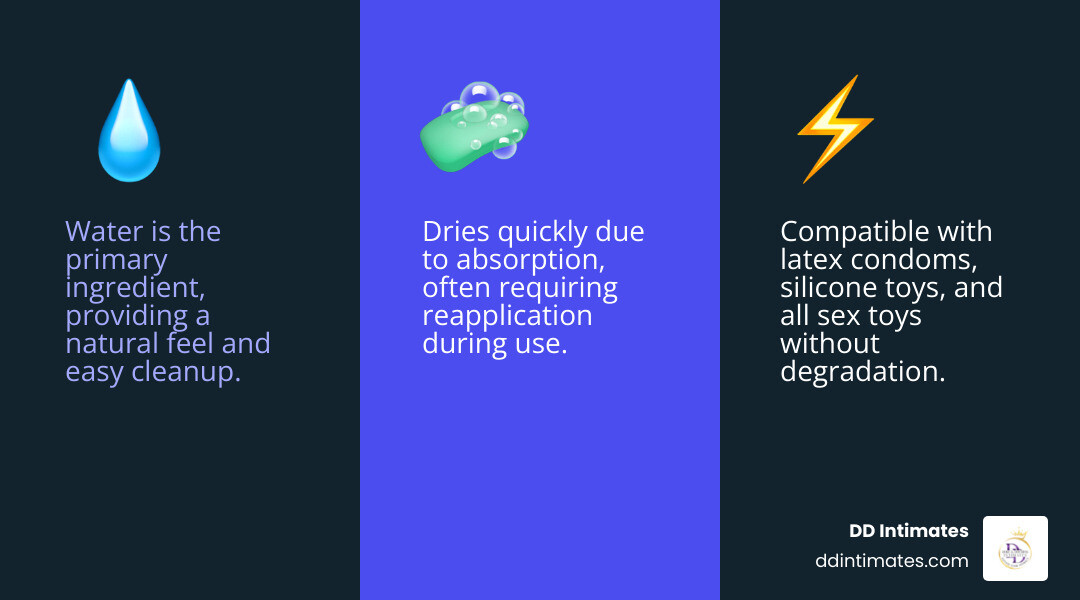
In sexual wellness, not all slips are created equal. When we talk about water based lubricant, we are referring to formulas where water is the primary ingredient (usually listed first on the label). This makes them the most versatile and widely recommended option for everyday use.
However, to truly understand why water-based options are often the "gold standard" for sensitive bodies, it helps to see how they stack up against the competition. We’ve put together a beginners guide to lubricants to help you navigate these choices, but here is a quick breakdown:
| Feature | Water-Based | Silicone-Based | Oil-Based |
|---|---|---|---|
| Main Ingredient | Purified Water | Silicone (Dimethicone) | Natural or Mineral Oils |
| Cleanup | Very Easy (Water/Soap) | Difficult (Requires Soap) | Difficult (Stains fabrics) |
| Toy Safety | Safe for all materials | Can damage silicone toys | Can damage many toys |
| Condom Safety | Safe for Latex/Poly | Safe for Latex/Poly | Breaks down Latex |
| Texture | Natural, mimics body | Silky, very slippery | Thick, greasy |
| Longevity | May need reapplication | Very long-lasting | Long-lasting |
While silicone lubes are great for water play and oil-based lubes provide a thick cushion, they both come with significant downsides for sensitive users. Oils can trap bacteria and disrupt vaginal pH, leading to infections. Silicone, while hypoallergenic, requires more effort to wash off. For a deeper dive into these differences, check out our article on understanding lubricants the complete breakdown.
Is Water Based Lubricant Safe for All Toys?
One of the biggest advantages of choosing a water based lubricant is its universal compatibility. If you enjoy using adult toys, you don't have to worry about the material of your device when using a water-based formula.
Products like Pjur Aqua are formulated to be non-degrading, meaning they won't melt your silicone vibrators or damage delicate rubber attachments. Furthermore, they are perfectly safe for use with natural rubber latex, polyisoprene, and polyurethane condoms. This makes them the safest choice for protected sex, as they won't cause the material to weaken or break.
Limitations and Drawbacks to Consider
No product is perfect, and water based lubricant does have a few quirks you should be aware of. Because the main ingredient is water, these lubes eventually evaporate or are absorbed by the skin and mucous membranes. This means that during a "marathon session," you might find yourself needing to reapply.
Additionally, because they are water-soluble, they aren't the best choice for the shower or pool. The moment they hit running water, they’ll wash right away. If you find that standard bottles aren't enough for your needs, many of the formulas in our water based range come in larger bottles so you are not rationing it mid-moment.
The Sensitive Skin Guide: Ingredients to Look For and Avoid
For those of us with sensitive skin, the ingredient list is more than just fine print-it's a roadmap to avoiding a week of discomfort. Many mainstream lubricants contain additives that are fine for the skin on your arm but can be disastrous for the delicate, highly absorbent tissue of the vulva and vagina.
Ingredients to Avoid:
- Glycerin: A sugar alcohol often used as a humectant. It can feed yeast, potentially leading to yeast infections in those who are prone to them.
- Parabens: Preservatives (like methylparaben) that have been flagged as potential endocrine disruptors. Some studies suggest they can mimic estrogen.
- Propylene Glycol: Often used to create a warming sensation, but it is a frequent cause of contact dermatitis and irritation.
- Fragrances and Dyes: Completely unnecessary for function and a top cause of allergic reactions.
Ingredients to Look For:
If you want the best for your body, look for products that prioritize "osmolality." This is a scientific term for the concentration of substances in the liquid. If a lube is "iso-osmotic," like the glycerin-free naturals formulas, it matches the natural fluid levels of your body. This prevents the lube from sucking moisture out of your cells (which causes dryness) or forcing too much moisture in (which causes swelling and irritation).
Some people also enjoy a bit of extra sensation. If you’re looking for a thrill without the chill of harsh chemicals, you might explore a tingling sensation lube that uses natural botanicals rather than synthetic irritants.
Health Concerns and Common Irritants
The vaginal microbiome is a delicate ecosystem. It relies on a specific pH (usually between 4.0 and 4.4) to keep "bad" bacteria at bay. Using a water based lubricant that isn't pH-balanced can throw this system out of whack, leading to Bacterial Vaginosis (BV) or thrush.
As we mentioned, nearly 20% of women experience dryness. That is a comfort issue worth taking seriously, not something to push through. Dryness can be caused by menopause, breastfeeding, stress, or medications. Classic options like K-Y Jelly have been around for decades because they are fragrance-free and designed to mimic natural moisture, providing a safe "cushion" for those experiencing discomfort.

Product Roundup: Best Options for 2026
By April 2026, the market has expanded to include some truly incredible formulations. Here is our roundup of the top-performing water based lubricant options currently available for those who value both pleasure and purity.

1. K-Y Liquid Water-Based Lubricant
As the #1 doctor-recommended brand, K-Y Liquid is a staple for a reason. It’s formulated without sulfates, hormones, or parabens. It’s a "no-frills" lubricant that gets the job done without leaving a greasy residue. It’s particularly good for those who find thicker gels to be too "heavy."
2. JO H2O Original
If you want a lube that feels like silk, JO H2O is a top contender. It’s famous for its long-lasting glide. While it does contain some preservatives to keep it shelf-stable, it is FDA-cleared and widely praised for its non-sticky finish.
3. Id Free Water Based Lubricant
Id Free is the no-nonsense everyday pick: glycerin-free, paraben-free and fragrance-free, with nothing in it to argue with delicate skin. It is compatible with every toy material and it rinses clean, which makes it an easy default for couples who go through a lot of product.
Choosing the Best Water Based Lubricant for Sensitivity
If you are at the extreme end of the sensitivity spectrum, we recommend looking toward "Naturals" lines. Sliquid Naturals H2O is a standout because it uses plant cellulose as a thickener instead of glycerin or sugar derivatives. This makes it hypoallergenic and extremely unlikely to cause a reaction.
For those who want to add a bit of fun to the mix, you can find flavored menthol cooling lube options that are still formulated with sensitivity in mind. Just remember to always patch test a new product on a small area of skin before full application!
Application, Cleanup, and Maintenance
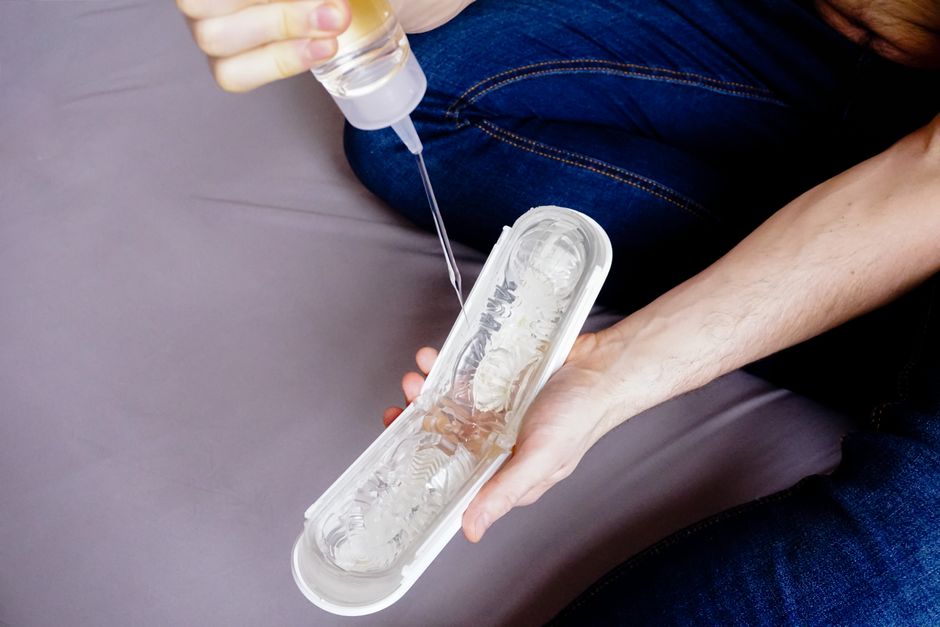
Using water based lubricant effectively is all about timing and quantity. Don't be afraid to be liberal with your application!
Pro-Tips for Application:
- Warm it up: Rub the lube between your palms for a few seconds before application to avoid the "cold shock" sensation.
- Reactivate with water: If your water-based lube starts to feel tacky, you don't always need more lube. A few drops of water or a bit of natural moisture can often "reactivate" the glide.
- Internal and External: For the best experience, apply to both yourself (or your partner) and the toy or condom.
Cleanup and Fabric Safety
One of the best things about a water based lubricant is the cleanup. Unlike silicone or oil, it won't leave a permanent stain on your favorite silk sheets or lingerie. Most will wash out in a standard laundry cycle. For your body, a simple rinse with warm water is usually all that's required. You don't need harsh soaps to remove it, which is another win for your pH balance!
If you're using your lube alongside a new purchase, be sure to check out our guide to find your perfect toy to ensure your gear is as high-quality as your lubricant. And if you're looking for something with a bit more "kick," a lube with tingling sensation can provide a whole new level of arousal.
Conclusion and FAQs
At DD Intimates, we believe that everyone deserves a comfortable and pleasurable intimate life. Whether you're dealing with the 20% of women facing dryness or you're part of the 65.5% who use lube to enhance their experience, the right water based lubricant makes all the difference.
We are proud to offer fast domestic shipping from the USA in discreet, plain packaging so your business stays your business. Plus, enjoy free shipping on all orders over $100!
Does water-based lubricant dry out quickly?
It can dry out faster than silicone because it is absorbed by the skin. However, high-quality formulas like JO H2o Gel are designed to stay slick longer. You can always reactivate the glide with a tiny bit of water or saliva.
Is it safe to use water-based lube with latex condoms?
Yes! In fact, it is the only type of lube (along with some silicones) that is 100% safe for latex. Oil-based products will dissolve latex, leading to condom failure.
Can I use water-based lubricant for anal play?
You can, but you may need a thicker "gel" version. Because the anus does not produce its own moisture, water-based lubes can be absorbed quickly. Many people prefer a dedicated anal lube or a thick water-based gel for this activity. If you want a little extra sensation, you might even try the best menthol personal lube for a cooling effect.
Finding the right water based lubricant is a journey of self-care. By prioritizing pH balance, avoiding harsh chemicals, and choosing trusted brands, you can ensure that your intimate moments are defined by pleasure, not irritation.
Shop water based lubricants
Every formula above is on the shelf now. Browse the full range of body-safe water based lubricants, including the glycerin-free and fragrance-free options built for sensitive skin.
Every order ships in plain, unmarked packaging with discreet billing. Free US shipping over $100.
Keep reading
-
Posted in
water based lubricant


