
The Intimate Wellness Checklist: What You Might Be Missing
The Intimate Wellness Checklist: What You Might Be Missing
Most people start their intimate wellness journey with a product. That's a fine place to begin — but a complete wellness routine is more than a single purchase. It's a set of practices, supporting products, and personal rituals that work together to make your experience safer, more comfortable, and genuinely more enjoyable.
Think of this as your foundation checklist. Some of it you may already have covered. Some of it might be exactly what's been missing.
---
1. Lubricant — The Most Underrated Essential
If there's one item that belongs in every intimate wellness routine, it's lubricant. And yet it's frequently the last thing people think about — or the first thing they skip.
Lubricant reduces friction, increases comfort, and meaningfully enhances sensation for most people. It's not a signal that something is wrong; it's a tool, the same way a good moisturizer is a tool for skin health.
There are three main types, and they're not interchangeable:
Water-based lubricant
The most versatile option. Safe with all toy materials (including silicone), safe with latex condoms, easy to clean up, and unlikely to cause irritation. The trade-off is that it tends to absorb into skin and may need to be reapplied during extended sessions. Look for formulas that are glycerin-free if you're prone to yeast infections, and pH-balanced (around 3.8–4.5) for vaginal use.
Best for: Everyday use, silicone toys, latex condoms, sensitive skin.
Silicone-based lubricant
Long-lasting and waterproof — it doesn't absorb into the skin the way water-based formulas do, making it a good choice for use in water or when you'd rather not stop to reapply. The important caveat: silicone lubricant degrades silicone toy surfaces over time. Do not use it with silicone products.
Best for: Non-silicone toys, glass, stainless steel, condom-compatible use (check brand compatibility), water play.
Oil-based lubricant
Natural oils like coconut oil have become popular, and some people find them genuinely comfortable. The significant drawback: oils degrade latex, making them incompatible with most condoms. They can also be harder to clean up and may disrupt vaginal pH for some people.
Best for: External use, non-latex situations, personal preference.
[Explore our lubricant collection →](/collections/lubricants)
---
2. Toy Cleaner — Non-Negotiable
A dedicated toy cleaner is not a luxury item. It's the difference between a product that stays body-safe over time and one that becomes a source of irritation or infection.
Here's why it matters: even body-safe materials can harbor bacteria if not properly cleaned. A toy cleaner formulated for intimate products is pH-appropriate, gentle on materials, and effective against the pathogens that matter in this context. Most general household cleaners are either too harsh (damaging surfaces or leaving residue) or not effective enough against the specific concerns here.
What to look for in a toy cleaner:
Quick cleaning protocol:
1. Spray cleaner directly on the product or onto a clean cloth
2. Wipe down all surfaces thoroughly, paying attention to ridges or textured areas
3. Rinse with warm water (except where charging ports make this inadvisable)
4. Air dry completely before storing
For motorized products, never submerge unless the product is explicitly rated waterproof (IPX7 or above).
[Shop toy cleaners →](/collections/toy-cleaners)
---
3. Storage — What Most People Skip
How you store your products matters more than most people realize.
A product that isn't stored properly can collect dust, pick up lint, come into contact with materials that degrade it, or trap residual moisture that creates bacterial growth. None of those outcomes are good for the product or for you.
The basics:
A small, discreet storage box with individual compartments is one of the better investments for anyone with more than one or two products — it keeps things organized, clean, and easy to access.
---
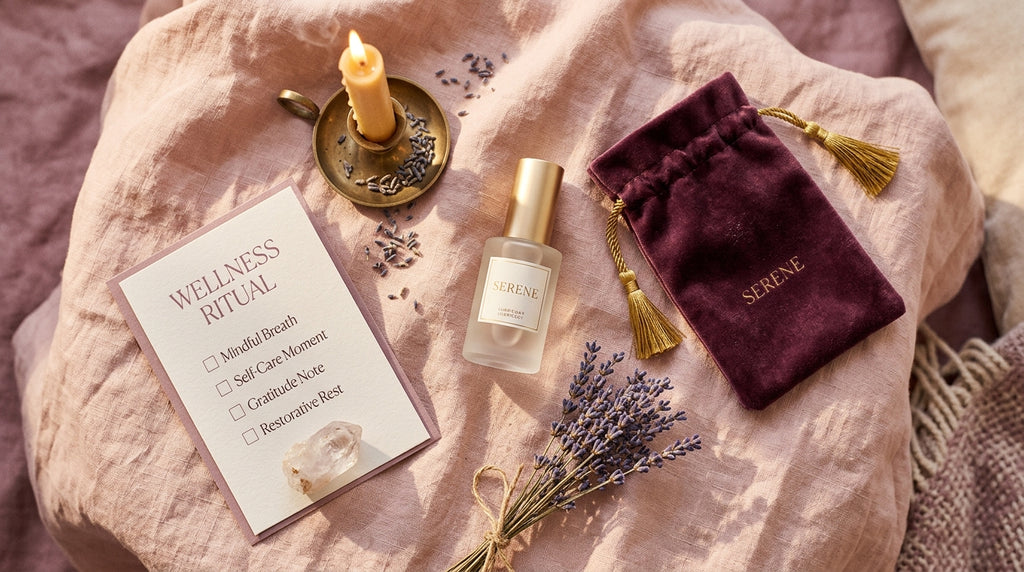
4. Self-Care Rituals — The Context Around the Product
A wellness routine isn't just what you use. It's the conditions you create around it.
Intimate wellness, at its best, is about connection — with your own body, your own pleasure, your own sense of what feels right. That kind of connection is easier to access when you've given yourself actual space for it.
A few ritual elements worth building in:
Time. Not time you've stolen from something else, but time you've actually set aside. Even 20 to 30 minutes of uninterrupted space changes the quality of the experience considerably.
Environment. Lighting, temperature, sound — these things influence your nervous system and your ability to relax. A warm bath beforehand, low lighting, music or silence — whatever creates a sense of ease for your specific body.
Breath. This sounds simple and it is. Before and during, intentional breathing helps activate the parasympathetic nervous system — the body's rest-and-digest mode — which directly supports arousal and sensation. If you find it hard to relax into an experience, breath is the first place to look.
Presence. Putting your phone in another room is not a small thing. Distraction is genuinely the enemy of pleasure, and most people are more distracted than they realize.
Aftercare. What you do after matters too. Hydrate. Give yourself a moment before jumping back into tasks. This isn't indulgent — it's part of treating your nervous system with respect.
---
5. Communication with Partners — The Piece People Often Defer
If you share your intimate wellness practice with a partner or are considering it, communication is the foundation everything else rests on.
This doesn't have to be a formal conversation. Often the most effective approach is simple, low-stakes sharing — mentioning a product you're curious about, asking what your partner enjoys, expressing what you'd like more of.
A few things that make these conversations easier:
Choose a low-pressure moment. Not in the middle of a moment when stakes feel high. A relaxed afternoon, a walk, dinner — anywhere that isn't the bedroom tends to feel lower pressure.
Use "I" language. "I'd be curious to try..." lands differently than "I think we should..." One expresses your experience; the other can feel like a directive.
Normalize curiosity. Approaching these conversations from curiosity rather than criticism opens space for your partner to be curious too, rather than defensive.
Discuss boundaries clearly. What each person is comfortable with, what they're not, and how you'll check in during — these are conversations worth having explicitly rather than assuming.
Revisit regularly. Interests and comfort levels evolve. A conversation you had a year ago may not reflect where either of you is today. Building in occasional check-ins keeps the dynamic alive and honest.
[Explore our partner collection →](/collections/couples)
---
Your Checklist at a Glance
| Category | What to Have | Why It Matters |
|----------|-------------|----------------|
| Lubricant | Water-based (minimum); silicone-based optional | Comfort, safety, enhanced sensation |
| Toy Cleaner | Fragrance-free, pH-balanced spray or foam | Hygiene, material longevity |
| Storage | Individual pouches; dedicated case for collections | Protects materials, prevents contamination |
| Self-Care Ritual | Dedicated time, intentional environment | Supports relaxation, enhances experience |
| Communication | Ongoing, low-pressure conversations with partners | Safety, trust, mutual satisfaction |
---
Building a wellness routine takes some intention upfront, but the investment is straightforward: better products, cared for properly, used in conditions that actually support your wellbeing. That's the whole framework.
If you're not sure where to start building out your collection, our team is always happy to help — reach out through our contact page or take the [Toy Finder Quiz](/pages/toy-finder-quiz) for a personalized starting point.
---
At DD Intimates, we curate every product with body safety, quality, and genuine wellness value in mind. No fillers, no compromise.
---
Sources
1. World Health Organization. ["WHO/UNFPA Technical Consultation on the Use of Lubricants."](https://extranet.who.int/prequal/sites/default/files/document_files/8-day2_session5.5_personallubricantsosmolality.pdf) WHO, 2012. (Basis for pH and osmolality guidance for vaginal lubricants.)
2. International Organization for Standardization. ["ISO 3533:2021 — Sex Toys: Design and Safety Requirements."](https://www.iso.org/standard/79631.html) ISO, 2021.
3. Herbenick, D., et al. ["Association of Lubricant Use with Women's Sexual Pleasure, Sexual Satisfaction, and Genital Symptoms."](https://pubmed.ncbi.nlm.nih.gov/21143591/) Journal of Sexual Medicine, 2011.


